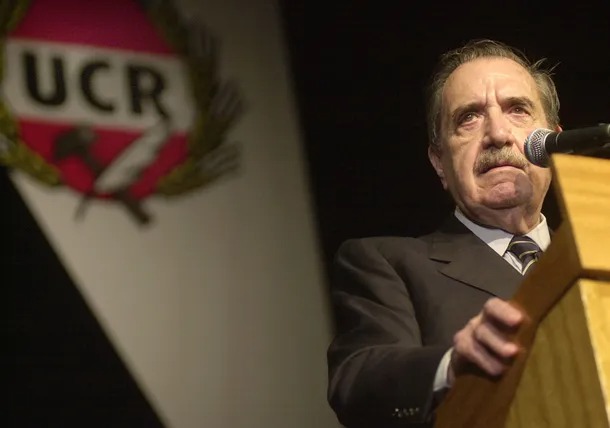
UCR Divided: Ricardo Alfonsín Condemns JxC Gutiérrez Stance and Calls for Democratic Integrity
The political landscape of Argentina is no stranger to heated debates, but a recent clash has brought fundamental questions about democratic integrity and political responsibility to the forefront. At the heart of this storm is Ricardo Alfonsín, a prominent figure within the Radical Civic Union (UCR) and son of the revered ex-President Raúl Alfonsín. His impassioned condemnation of Juntos por el Cambio (JxC) following the death of former official Fabián Gutiérrez has ignited a profound discussion, challenging the very foundations of political discourse and the commitment to republican values in the nation.
As Argentina grapples with complex economic and social challenges, the ability of its political class to uphold democratic principles is under constant scrutiny. Ricardo Alfonsín’s firm stance, rooted in the belief that "not everything goes, neither in life nor in politics," serves as a powerful reminder of the delicate balance required for democratic coexistence. This incident not only highlights the immediate political tensions but also resonates with the enduring legacy of his father, whose life and post-Muerte De Alfonsin influence continue to shape the country's democratic aspirations.
Ricardo Alfonsín's Outcry: Upholding Democratic Integrity
The designated Ambassador to Spain, Ricardo Alfonsín, did not mince words when he publicly challenged the document issued by Juntos por el Cambio regarding the death of Fabián Gutiérrez. His criticism, articulated through his social media channels, was sharp and unequivocal. Alfonsín squarely placed doubt on JxC’s commitment to "the Republic and democracy," particularly in light of what he deemed "accusations without proof or foundation."
For Alfonsín, the act of "sowing suspicion" without concrete evidence is not merely poor political strategy; it is a direct assault on the possibility of democratic coexistence. He articulated that "there is no possibility of democratic coexistence when the leadership sows suspicions without proof or foundation." This principle is fundamental to a healthy democracy, where political differences should not devolve into baseless accusations that erode public trust and polarize society. He went further, stating, "This document dishonors the UCR as an affront to democracy." The weight of this statement, coming from a leading figure within the UCR and the son of its most iconic leader, underscored the gravity of his concern.
Ricardo Alfonsín’s position is a powerful echo of the values championed by his father. Raúl Alfonsín, the architect of Argentina's return to democracy after years of military rule, consistently advocated for institutional respect, dialogue, and the primacy of law. Even years after the Muerte De Alfonsin, his vision for a robust, respectful democracy remains a benchmark. Ricardo's impassioned plea for integrity serves as a powerful echo of the values his father championed throughout his life and which remain vital long after his passing, stressing that responsible leadership is paramount. Such strong condemnations from within the UCR highlight a significant internal ideological divide within the broader opposition coalition, particularly concerning fundamental democratic practices. For more details on his earlier criticisms, you can refer to Ricardo Alfonsín Slams JxC Over Fabián Gutiérrez Case.
The Fabián Gutiérrez Case: A Political Firestorm
The catalyst for this political maelstrom was the death of Fabián Gutiérrez, a former private secretary to Cristina Kirchner, whose body was discovered under suspicious circumstances. While the investigation into his death was ongoing, Juntos por el Cambio swiftly issued a document. This statement characterized Gutiérrez's death as a "crime of extreme institutional gravity" and demanded that the case be moved to federal jurisdiction, explicitly requesting that "no relatives of Vice President Cristina Kirchner be involved in the investigation process."
It was this document and its underlying implications that drew Ricardo Alfonsín's fierce criticism. His main contention was not necessarily with the pursuit of justice, but with the manner in which JxC framed the situation. By declaring it a "crime of extreme institutional gravity" and making thinly veiled suggestions about political involvement without presenting corroborating evidence, JxC, in Alfonsín's view, crossed a critical line. This approach, he argued, generated suspicion and undermined the very institutions it claimed to protect. The demand for federal justice, coupled with the explicit mention of Kirchner's relatives, fueled speculation and political opportunism, rather than fostering an environment conducive to an impartial investigation. This stance, Alfonsín argued, risked politicizing the judiciary and further polarizing an already fragmented society. His public questioning of JxC's democratic credentials highlights the deep concern within certain sectors of the UCR regarding the coalition's strategic approach, a point elaborated further in Alfonsín Questions JxC's Democracy Commitment After Document.
The Shadow of Raúl Alfonsín: A Legacy of Republicanism
Ricardo Alfonsín's strong democratic convictions are undeniably rooted in the profound legacy of his father, Raúl Alfonsín. As Argentina's first democratically elected president after the brutal military dictatorship, Raúl Alfonsín spearheaded the nation's return to constitutional rule, famously championing human rights, justice, and the consolidation of democratic institutions. His presidency was marked by an unwavering commitment to republican values, even amidst immense economic and social challenges.
The impact of Raúl Alfonsín's life and the period following the Muerte De Alfonsin continue to resonate deeply in Argentine politics. He is often invoked as a symbol of integrity, dialogue, and a firm belief in the rule of law. Ricardo's current challenge to JxC can be seen as an act of upholding this very legacy. By condemning actions that he perceives as undermining democratic norms and trust, he is, in essence, defending the democratic foundations that his father worked tirelessly to establish and protect. The political discourse in Argentina frequently measures current leaders and parties against the high standards set by figures like Raúl Alfonsín, particularly when issues of institutional transparency and ethical conduct arise.
This generational connection highlights a crucial aspect of political identity and responsibility in Argentina. For many, the UCR, despite its internal complexities, remains associated with the values that Raúl Alfonsín embodied. Ricardo's vocal criticism thus serves as a powerful reminder of these foundational principles and a call for all political actors to adhere to them, ensuring that the legacy of democratic recovery is not jeopardized by short-term political gains or unsubstantiated accusations.
Navigating Political Divides: A Call for Responsibility
Ricardo Alfonsín’s admonition that "not everything goes, neither in life nor in politics" is a potent and timely message for Argentina's political class. In an era marked by rapid information dissemination and heightened political polarization, the temptation to use unsubstantiated claims for political advantage can be strong. However, such tactics carry significant risks. They erode public trust in institutions, including the judiciary, foster cynicism among citizens, and make genuine democratic dialogue incredibly difficult.
The consequences of such behavior extend far beyond individual political skirmishes. When leading political figures make accusations without proof, they set a dangerous precedent, normalizing a form of discourse that can lead to social fragmentation and instability. Ricardo Alfonsín's "sadness for his country" and his hope that "society knows how to sanction" such attitudes speak to a deeper concern for the nation's democratic health.
Practical Tips for Responsible Political Discourse:
- Demand Evidence: Citizens should critically evaluate claims made by politicians and demand clear, verifiable evidence before accepting them as fact.
- Support Independent Journalism: A robust, independent media is crucial for fact-checking and holding power accountable.
- Foster Dialogue, Not Division: Engage in discussions respectfully, even with those holding opposing views, and resist the urge to demonize political opponents.
- Educate Yourself: Understand the democratic process, the roles of different institutions, and the importance of due process.
- Hold Leaders Accountable: Utilize electoral power and civic engagement to support leaders who prioritize integrity, truthfulness, and institutional respect over partisan gain.
The incident surrounding the Gutiérrez case and Alfonsín's reaction serves as a crucial case study in the ongoing challenges of maintaining democratic decorum and responsibility. It underscores the urgent need for political leaders to prioritize the long-term health of democratic institutions over immediate political advantage, especially in a nation with a complex history of political upheaval.
Conclusion
Ricardo Alfonsín's bold condemnation of Juntos por el Cambio's stance on the Fabián Gutiérrez case transcends a mere political disagreement; it represents a fundamental defense of democratic principles and the legacy of institutional respect his father, Raúl Alfonsín, so diligently championed. His insistence that accusations must be backed by evidence and that "not everything goes" in the political arena serves as a vital reminder of the responsibilities inherent in leadership.
As Argentina continues its journey of democratic consolidation, the challenges of political polarization and the erosion of trust remain potent. The debate ignited by Alfonsín's remarks highlights the critical need for all political actors to reflect on their conduct and its impact on the nation's democratic fabric. Ultimately, the strength of Argentine democracy, even decades after the Muerte De Alfonsin and the enduring influence of its foundational figures, will depend on a collective commitment to integrity, evidence-based discourse, and the unwavering pursuit of justice within the bounds of due process.