Ricardo Alfonsín Slams JxC Over Fabián Gutiérrez Case: A Defense of Democratic Principles
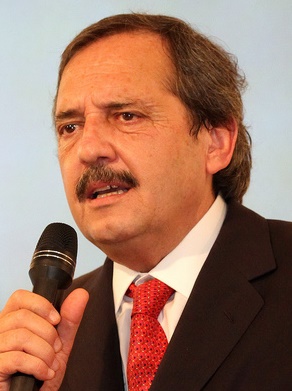
In a powerful indictment that resonated across Argentina's political landscape, Ricardo Alfonsín, son of the revered former President Raúl Alfonsín and designated ambassador to Spain, unequivocally condemned Juntos por el Cambio (JxC) for its stance on the death of Fabián Gutiérrez. Alfonsín's criticisms, delivered with characteristic conviction, questioned the opposition coalition's commitment to foundational democratic values, particularly in its handling of a case fraught with political implications. His remarks underscored a crucial debate about responsible political conduct and the sanctity of truth in public discourse, especially in a nation still grappling with the complex legacy of its democratic transition.
The Core of the Controversy: Fabián Gutiérrez's Death and JxC's Stance
The controversy ignited following the tragic death of Fabián Gutiérrez, a former private secretary to then-President Cristina Fernández de Kirchner, who was found dead in Santa Cruz province. The circumstances of his death, combined with his past involvement in corruption investigations, quickly became a flashpoint for political speculation and accusation. Gutiérrez had previously testified as a repentant witness in the "notebooks case," an extensive investigation into alleged corruption during Kirchner's presidencies, adding layers of complexity and suspicion to his demise.
Responding to the news, Juntos por el Cambio, a prominent opposition coalition composed of the UCR, PRO, and Civic Coalition, issued a strong statement. In their document, JxC warned of the "extreme institutional gravity" of Gutiérrez's death. They called for the investigation to be transferred to the federal justice system and explicitly demanded that no relatives of Vice President Cristina Kirchner be involved in the process. This document, intended to highlight concerns about transparency and judicial independence, instead drew a sharp rebuke from within the ranks of its own allies.
The opposition's swift move to frame the death as an issue of "institutional gravity" and link it to the Vice President's family without concrete judicial findings was precisely what drew Ricardo Alfonsín's ire. Such pronouncements, in his view, risked prejudicing the investigation and, more broadly, eroding public trust in democratic institutions.
Ricardo Alfonsín's Outspoken Rebuke: Upholding Democratic Integrity
Ricardo Alfonsín, a figure known for his principled stands, wasted no time in expressing his profound disagreement with JxC's approach. From his temporary base in Argentina, awaiting travel to Spain due to the ongoing pandemic, Alfonsín took to Twitter to voice his condemnation. His central message was clear and uncompromising: "Not everything goes, neither in life nor in politics." This powerful declaration served as a moral compass, guiding his critique of what he perceived as irresponsible and unfounded accusations.
He expressed serious doubts about JxC's genuine commitment to "the Republic and democracy," particularly when the coalition engaged in "accusations without proof or foundation." Alfonsín argued that such actions create an environment where "there is no possibility of democratic coexistence when the leadership sows suspicions without proof or foundation." For him, the integrity of political debate hinges on adherence to verifiable facts, not on speculative claims that can destabilize public confidence and foster division.
His criticism went further, specifically targeting the UCR, his own party and a component of JxC. He declared that the document issued by JxC was an "affront to democracy" and, consequently, "dishonors the UCR." This direct challenge highlighted an internal fissure within the coalition, with Alfonsín positioning himself as a defender of traditional radical principles against what he saw as opportunistic political maneuvering. His remarks directly questioned the moral authority of his own party's leadership, suggesting a deviation from the core values of honesty and respect for institutions that the UCR historically championed. For more insights into this internal debate, consider reading Alfonsín Questions JxC's Democracy Commitment After Document.
Alfonsín concluded his forceful statement with a plea for societal accountability, expressing hope that "society knows how to sanction" such attitudes. He articulated a profound "sorrow for my country," reflecting a deep concern for the health of Argentina's democratic system. His stance not only challenged JxC but also ignited a broader discussion within the UCR itself, exposing differing views on how an opposition party should operate. The rift his statements created underscored a deeper tension within the opposition coalition, prompting many to consider the future direction of the UCR itself. To understand the internal party dynamics, read UCR Divided: Ricardo Alfonsín Condemns JxC Gutiérrez Stance.
The Broader Implications: Political Discourse and Institutional Trust
Ricardo Alfonsín's condemnation extends beyond the specifics of the Fabián Gutiérrez case, touching upon fundamental questions about the nature of political discourse in contemporary democracies. His critique serves as a vital reminder that an effective opposition, while crucial for checks and balances, must also operate within ethical boundaries, prioritizing truth and evidence over mere accusation.
The Dangers of Unsubstantiated Claims
In an age of rapid information dissemination and heightened political polarization, the propagation of unsubstantiated claims by political leaders carries significant risks. When accusations are made "without proof or foundation," they can:
- Erode Public Trust: Repeated baseless allegations can lead citizens to distrust all political actors and institutions, including the justice system itself.
- Fuel Polarization: Such claims deepen societal divides, making constructive dialogue and consensus-building increasingly difficult.
- Undermine Democratic Institutions: By casting doubt on due process and the independence of the judiciary, unsubstantiated accusations weaken the very pillars of democratic governance.
- Distract from Real Issues: The focus on political spectacle often diverts attention from pressing societal challenges that require genuine policy solutions.
Alfonsín's call for society to "sanction" such attitudes highlights the crucial role of citizens in demanding accountability and critical thinking from their elected representatives. It's a call to foster a political culture where facts, evidence, and respectful debate prevail over sensationalism and suspicion.
The Weight of Legacy: Alfonsín and Argentine Democracy
Ricardo Alfonsín's fervent defense of democratic principles is deeply rooted in his family's legacy. As the son of Raúl Alfonsín, the first democratically elected president after Argentina's last military dictatorship, he carries a heavy mantle of responsibility. Raúl Alfonsín's presidency symbolized the return of democracy, human rights, and the rule of law after years of state terror and political instability. His efforts to consolidate democracy, prosecute human rights abuses, and establish a framework for peaceful political competition laid much of the groundwork for modern Argentina.
Even years after the Muerte De Alfonsin (Raúl Alfonsín's passing), his ideals continue to resonate, reminding subsequent generations of politicians about the fragility of democracy and the constant vigilance required to protect it. Ricardo's impassioned statements can be seen as an effort to uphold these foundational values, ensuring that the hard-won gains of Argentina's democratic transition are not eroded by divisive rhetoric. He embodies a continuity of principles, arguing that the lessons of the past—about the dangers of authoritarianism and the importance of institutional respect—remain vitally relevant today.
Navigating Political Divides: A Call for Principled Engagement
In deeply divided political landscapes, navigating disagreements requires not just conviction but also a commitment to certain ground rules. Here are some insights for fostering more principled political engagement:
- Prioritize Evidence: All accusations and claims, especially those with significant institutional implications, should be backed by credible evidence and respect due process.
- Respect Institutions: Even when criticizing government actions, political actors should uphold the legitimacy of democratic institutions like the judiciary.
- Foster Dialogue: Encourage open and respectful debate, even among ideological opponents, to find common ground and avoid irreparable rifts.
- Educate the Public: Political leaders have a responsibility to inform, not misinform, the public, promoting critical thinking over blind allegiance.
- Self-Correction: Political parties and coalitions should have internal mechanisms for self-correction, holding their members accountable for divisive or unsubstantiated rhetoric.
Alfonsín's intervention serves as a powerful reminder that while robust debate is the lifeblood of democracy, it must be conducted with integrity and a profound respect for the institutions and principles that bind a society together.
Conclusion
Ricardo Alfonsín's sharp criticism of Juntos por el Cambio over the Fabián Gutiérrez case was far more than a simple political squabble. It was a resonant defense of democratic principles, a call for integrity in public discourse, and a warning against the corrosive effects of unsubstantiated accusations. His conviction, deeply informed by the legacy of his father, Raúl Alfonsín, underscores the ongoing challenge of maintaining democratic health in a polarized world. As Argentina, and indeed many democracies globally, grapple with internal divisions and the spread of misinformation, Alfonsín's message remains critically relevant: true commitment to democracy demands not just adherence to processes, but also a principled rejection of anything that undermines truth, justice, and the possibility of genuine democratic coexistence.